1 Mohurs
1A.3.2.1
This example
- Grade
- PMG20
- Cert #
- 8062166-012
- Realised
- Sign in to see price
- Estimate
- 6,000 - 8,000
- Sold
- 2025-05-09 · StacksBowers
This type
View all 6 examplesDescription
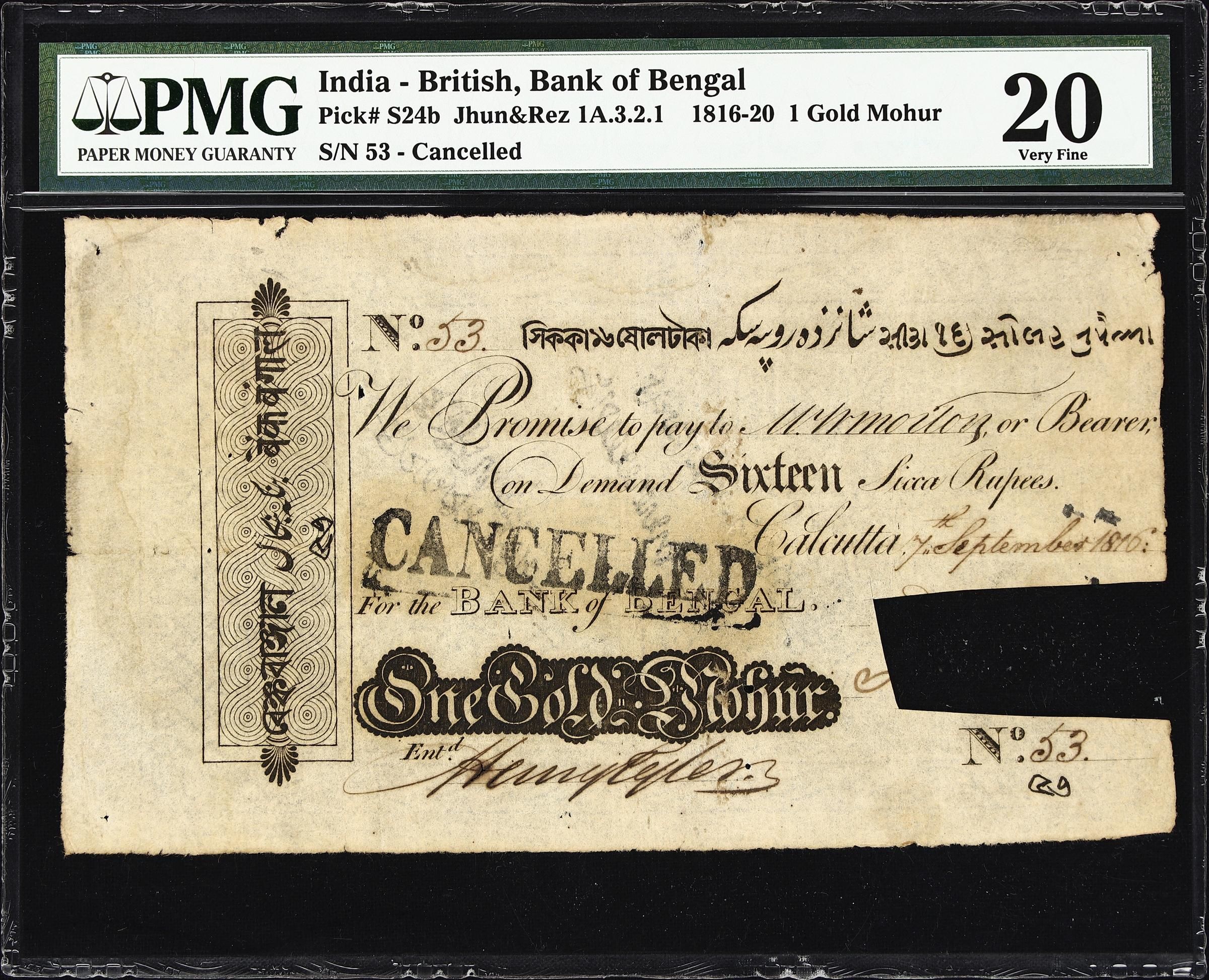
1816 Bank of Bengal 1 Gold MohurINDIA. Bank of Bengal. 1 Gold Mohur, 7.9.1816. P-S24b. Jhun&Rez 1A.3.2.1. PMG Very Fine 20.An early type from the Bank of Bengal, this 1 Gold Mohur (equal to sixteen sicca rupees) is one of the earliest collectible notes from India, dating back to 1816. The Bank of Bengal was one of three banks established under charters from the British East India Company and acted as the primary banking institution in the Bengal Presidency. The Bengal Presidency was the largest and most important of the three presidencies of British India, which were the British administrative divisions of India. In 1816, the year that this note was issued, the Bengal Presidency was the economic powerhouse of British India, driving trade, finance, and industry under the governance of the East India Company. Calcutta, its capital, had emerged as a global commercial hub, facilitating the export of textiles, indigo, saltpeter, and especially opium, which played a crucial role in British trade with China. The region’s agrarian economy was deeply intertwined with Company policies, as revenue collection from land taxes provided a steady stream of income for the British administration. The Bank of Bengal (established as the Bank of Calcutta in 1806 but renamed by 1809) played a pivotal role in stabilizing financial transactions, issuing early forms of banknotes that were gradually gaining circulation. Meanwhile, infrastructure development, including the expansion of river transport and port facilities, reinforced Bengal’s status as the commercial heart of British India.As virtually always for early Indian notes, this piece has been stamp and cut cancelled, but most of the printed segments of the note remain intact. It is important to note that note does not appear to have been severed at any point, which is very unusual as many of these were sent by post in two separate parcels and subsequently rejoined once both halves were received. A desirable type and among the earliest pieces of paper money from British India. PMG Comments "Annotations, Minor Ink Burn."Estimate: $6,000 - $8,000.
Auction record
- House
- StacksBowers
- Auction
- Spring 2025 Maastricht Showcase Auction
- Lot
- 50262
- Date
- 2025-05-09
- Source
- View original listing